Where the Light Stayed
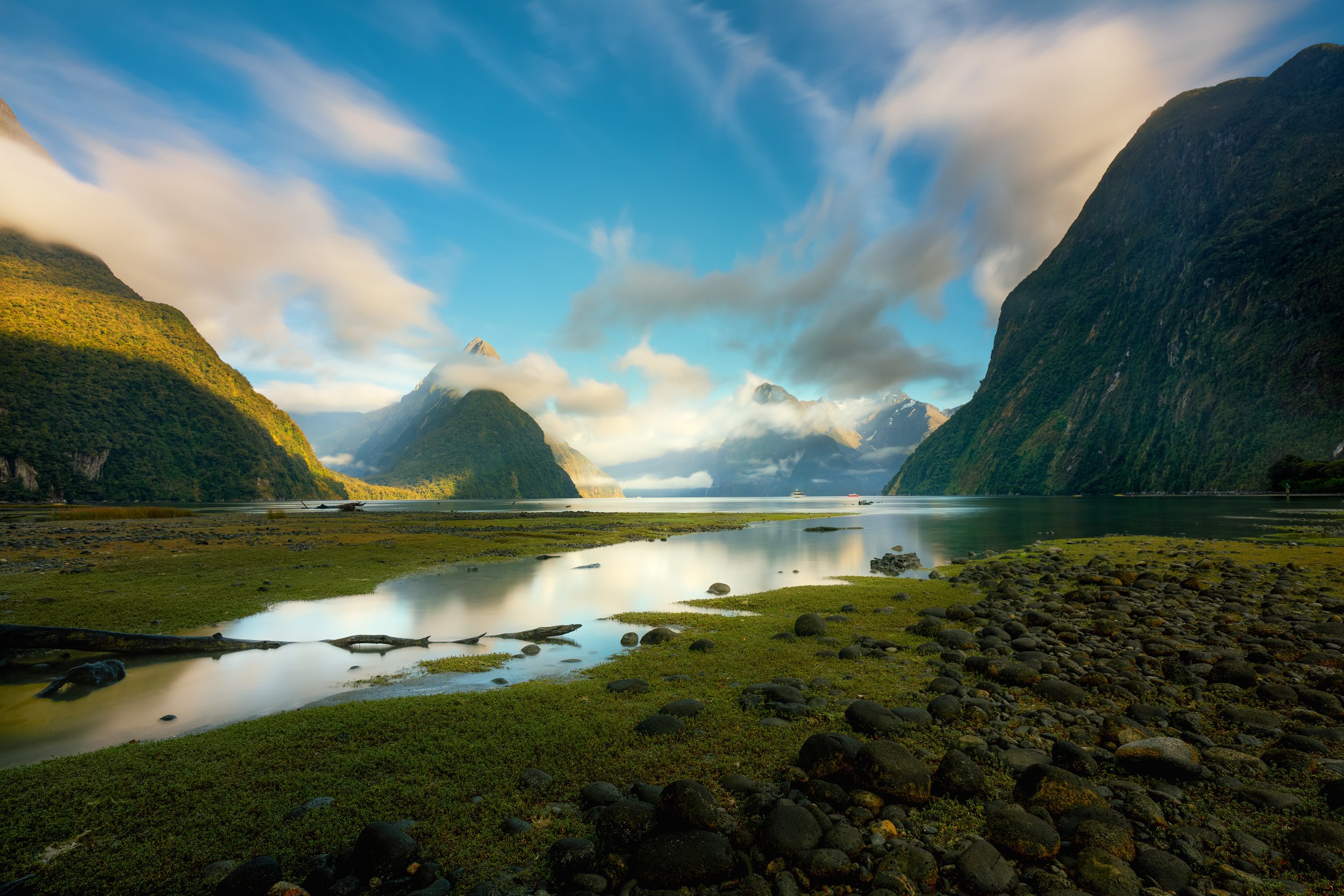
Milford Sound | New Zealand
Milford Sound is one of those places that makes you realise very quickly that photography has limits.
You stand there, surrounded by cliffs that feel almost too large to belong to the same world as you, and somehow you are supposed to fit all of that into a flat rectangle. The camera can capture the shape of it, the clouds, the water, the mountains, even the scale if you are lucky. But the feeling of space is harder. That quiet pressure of the landscape around you. The way everything seems to breathe slowly.
What caught me off guard most was the light.
In Australia, I am used to chasing those short windows where the sky suddenly catches fire and then, five minutes later, it is gone. You rush, you adjust, you try not to miss it. Milford was different. The light didn’t arrive like a performance. It lingered. It moved slowly across the cliffs and water, changing the scene gently rather than dramatically. Even though I was there at a time of year when the morning or evening sun wasn’t sitting directly in the frame, creating that big high-contrast colour show, the place still felt magical.
There was no need for fireworks.
The clouds were drifting across the peaks, softening the mountains and revealing them again. The water held the reflections quietly. The green of the valley floor, the dark stones, the huge walls on both sides — everything felt still, but alive.
Of course, Milford also gave me a little reality check. When I first arrived, a huge cruise liner was sitting right in the sound, blocking the view and making the whole scene nearly unusable for the kind of photo I had in mind. Not exactly the wild untouched wilderness mood I was hoping for. But patience saved the morning. Eventually it moved away, the space opened again, and the landscape returned to itself.
This image is not the full experience. I don’t think any photo could be. But it carries enough of the morning for me to remember how calm it felt standing there.
Definitely a place I need to come back to.
The Story Behind the Lens
This photograph was more about waiting than chasing.
The composition needed the foreground to help translate the scale of Milford Sound. The rocks, shallow water and patches of green lead the eye into the frame before the mountains take over. Without that foreground, the cliffs would still look impressive, but the space would feel flatter. With it, there is a sense of standing inside the scene rather than just looking at it from the outside.
The light was softer than I expected, and that became part of the mood. There was no blazing sunrise directly in the frame, no dramatic colour explosion, but the long-lasting glow gave the image a quieter atmosphere. The left side of the valley catches the warmer light, while the huge dark wall on the right keeps the frame grounded and gives the scene its depth.
The clouds were the real gift. They stretched and moved across the sky and mountains, creating that slow, dreamlike feeling that suits Milford so well. They also helped soften the size of the place. Instead of everything feeling sharp and heavy, the clouds made the landscape feel like it was floating in and out of view.
The cruise liner delay was frustrating at first, but in the end it probably helped. It forced me to slow down, watch the light, and understand the scene a bit better before taking the final image.
Milford Sound is not an easy place to photograph because it is almost too big for the frame. But maybe that is also the point. You don’t really capture it completely. You just bring back a piece of the silence.
30s / f/8 / ISO 100